Tax, law and invoicing in the trades — United States
16 posts for this country. We write our own posts per country instead of translations — the source and the date it was checked sit under every one.
 Zirko Redaktion4 min read
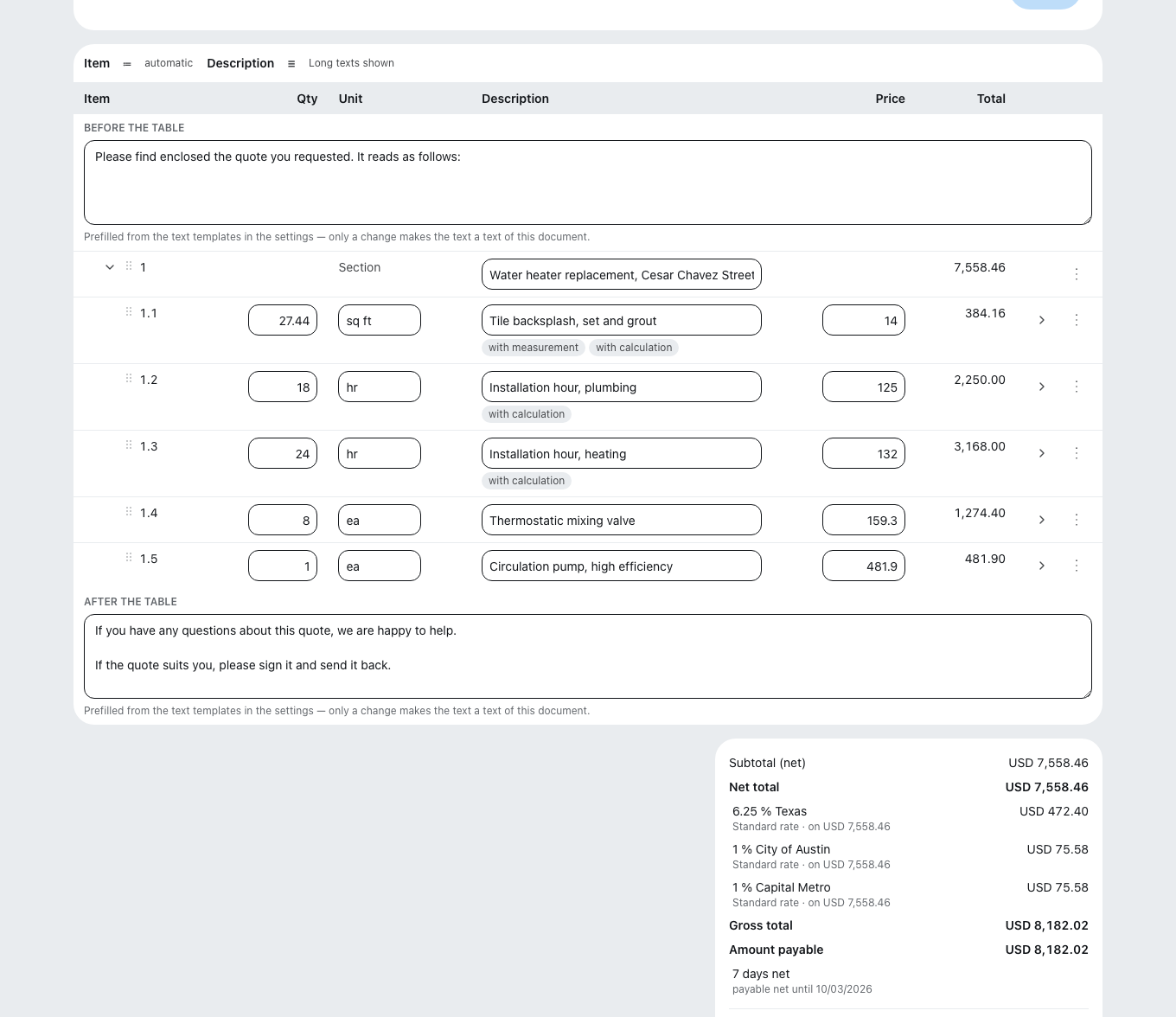
Contractor estimate: from takeoff to a price that holds
Pricing a job in the order you actually do it: quantities with units, labor split from material, markup against margin, allowances, and the change order that only counts in writing.
 Zirko Redaktion4 min read
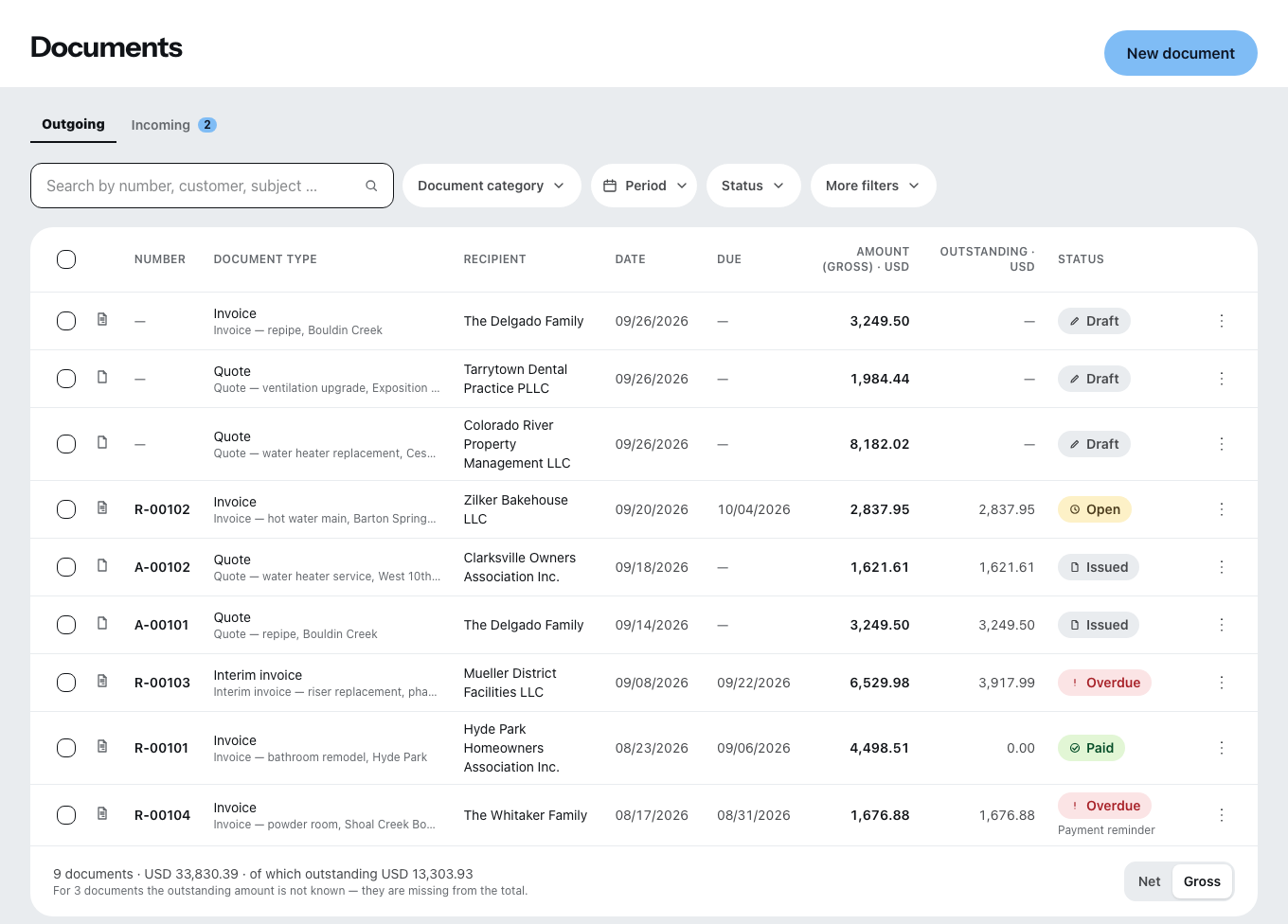
Invoicing for contractors: the billing run, in order
Billing a construction job: the schedule of values, percent complete, retainage on its own line, the lien waiver that gates the check, and what actually starts the payment clock.
 Zirko Redaktion4 min read
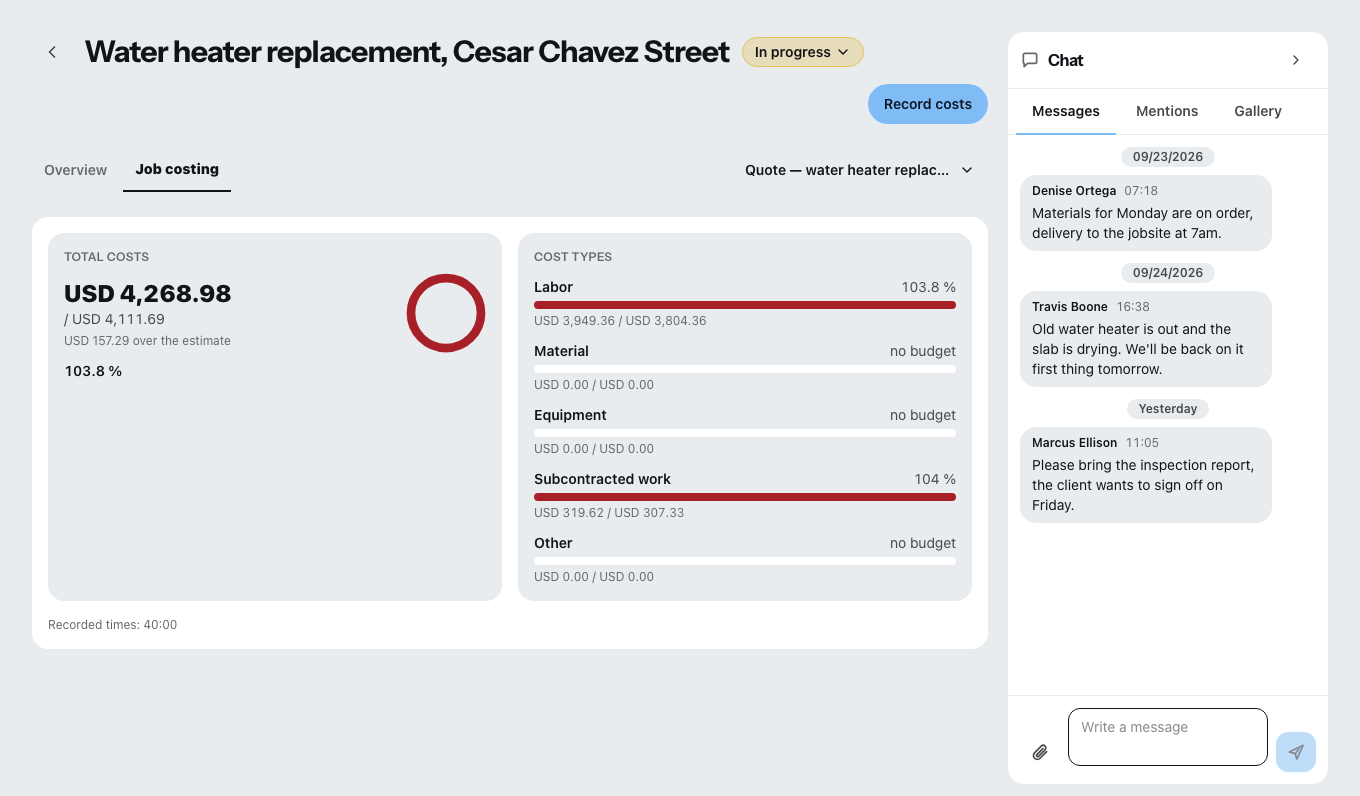
Job costing for contractors: five buckets and the burden
Cost a job the way the money is spent: labor with its burden, material, equipment, subs, other. Then markup against margin, sales tax that moves with the contract form, and retainage.
 Zirko Redaktion10 min read
California contractor license: a $1,000 exemption, a $25,000 bond
Working unlicensed in California is a misdemeanor, and Business and Professions Code § 7031 bars you from suing for your fee and lets the customer recover what they paid.
- Zirko Redaktion10 min read
California mechanics lien: three deadlines, two set by the owner
Serve the preliminary notice late and the lien covers only the last 20 days of work. Record within 90 days of completion, then sue within 90 days of recording.
- Zirko Redaktion9 min read
Contractor licensing by state: three states, three answers
There is no US contractor license. California exempts work under $1,000, Texas licenses the trades but not general contracting, Florida splits certified from registered.
 Zirko Redaktion10 min read
Davis-Bacon: federal work over $2,000, weekly certified payroll
Prevailing wages apply to federal construction contracts over $2,000. Pay weekly, submit certified payroll weekly with a signed Statement of Compliance, keep records three years.
- Zirko Redaktion11 min read
Mechanics lien deadlines: four states, four different calendars
California counts 90 days from completion, Texas to the 15th of a month, Florida wants notice within 45 days of starting, New York gives eight months — four on a house.
- Zirko Redaktion9 min read
Federal prompt payment: 14 days, and only for a proper invoice
Progress payments are due 14 days after the billing office receives a proper payment request, and the prime must pay subcontractors within 7 days of being paid.
- Zirko Redaktion9 min read
Retainage limits: 10 percent in Texas, 5 percent in New York
Retainage is not one rule. Texas requires the owner to hold 10 percent by statute. New York caps private retainage at 5 percent and forces release within 30 days.
- Zirko Redaktion10 min read
Sales tax on construction: one job, three states, three answers
In Texas, labor to repair a home is not taxable and the identical work on an office building is. In New York a capital improvement is exempt, but you pay tax on the materials.
- Zirko Redaktion10 min read
State prompt payment laws: the same 7 days, three penalties
California, Texas and New York each give a prime contractor seven days to pass payment down. What differs is the owner's deadline, the penalty, and who pays attorney's fees.
- Zirko Redaktion10 min read
Texas mechanics lien: stop counting days, count months
Texas measures every lien deadline to the 15th day of a month — the third, the fourth, the second for residential. Plus statutory 10 percent retainage and the five-day copy rule.
- Zirko Redaktion9 min read
Texas sales tax: home repair labor untaxed, office repair taxed
The same remodel is untaxed in an apartment and fully taxed in an office. New construction labor is untaxed unless remodeling exceeds five percent and is not stated separately.
- Zirko Redaktion8 min read
Form W-9: get it before the first check, not after the first 1099
A W-9 puts a subcontractor's taxpayer identification number on file. Miss it and you must withhold 24 percent of every payment and send it to the IRS, not to your sub.
- Zirko Redaktion10 min read
Contractor or employee: three tests, one California carve-out
The IRS uses a common-law control test with no magic number of factors. California applies the ABC test but exempts construction subcontracts when seven conditions are met.


